
KPV
KPV in brief
KPV is a three-amino-acid peptide: lysine, proline and valine. Those residues match the C-terminal end of alpha-MSH (alpha-melanocyte-stimulating hormone), a peptide hormone produced from the larger precursor POMC. KPV keeps a part of alpha-MSH that researchers associate with anti-inflammatory signaling while dropping the portion tied to pigmentation, which is why it is studied as a separate molecule.
What has been examined
Investigators have used KPV in cultured intestinal epithelial cells and immune cells, and in rodent models of colitis and skin inflammation. A recurring theme is its relationship with the NF-kB pathway, a central regulator of inflammatory gene expression. Some groups have also explored delivery approaches such as nanoparticle carriers in animal models. The work is preclinical and still developing. Because KPV is so short, it is also a convenient model for questions about how small peptides cross cell membranes and how quickly they are cleared, topics that matter well beyond this one molecule. Its simplicity is part of its appeal: three residues leave little room for ambiguity about what is being tested.
Two ways to source KPV here
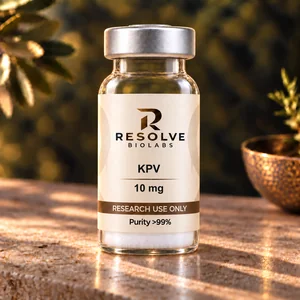
KPV vial
A lyophilized vial of KPV alone. The label gives the total peptide per vial, which makes it straightforward to prepare a solution of known concentration for single-compound studies.
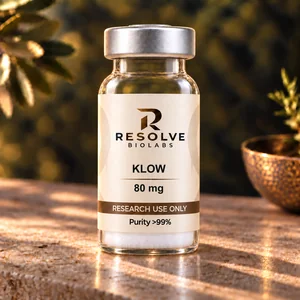
KLOW blend vial
KLOW includes KPV as one of four components, next to the copper peptide, BPC-157 and TB-500. It appears in this grid because it is the only Resolve blend that contains KPV. Labs studying the full combination often keep the KPV vial nearby as a comparison.
Paper trail
A certificate of analysis belongs to every lot. Compare the lot code on your vial with the reports gathered in COA / Lab Reports. New certificates are appearing there over time. If one is still pending, support can help when you send the product, the quantity and the lot.
KPV products are for laboratory research applications only.