
Epithalon
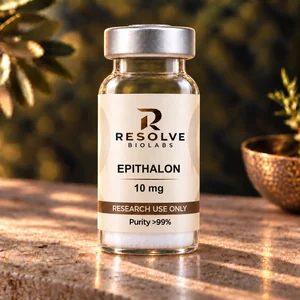
Epithalon, a four-residue peptide
Epithalon, also spelled epitalon, is a synthetic tetrapeptide with the sequence Ala-Glu-Asp-Gly (AEDG). It was developed in Russia, based on the composition of epithalamin, a peptide extract from the pineal gland. Epithalon itself is a defined small molecule, unlike the original extract, which makes it easier to standardize in research. Being only four residues long, it is also straightforward to characterize analytically.
What researchers have explored
Epithalon is best known in the literature for studies on telomeres and telomerase, the enzyme that maintains the protective caps at the ends of chromosomes. It has been examined in human cell culture for telomerase activity and in rodent studies of pineal function, melatonin rhythms and lifespan-related measures. Much of this work comes from a limited set of research groups, and independent replication is still an open need, which leaves room for new studies. Researchers have also examined its possible influence on chromatin structure and gene expression in cultured cells, another line still at an early stage.
In keeping with the Resolve outlook of science today for a brighter tomorrow, aging biology is one of the areas where small, well-documented experiments add the most.
The product above
Epithalon is listed as a lyophilized vial. Use the option selector on the card to see the strengths offered; the larger option suits long cell-culture series where a single lot throughout is preferable.
- Sequence: Ala-Glu-Asp-Gly
- Format: freeze-dried powder in a sealed vial
- Content: printed on each vial label
Confirming identity
The certificate of analysis for your epithalon is filed under its lot number. Check the lot on your vial against the reports in COA / Lab Reports, which we are building out as each one is completed. A clear match between lot and report is the first step in any well-documented study.
Epithalon is sold exclusively for laboratory research.