
Bacteriostatic Water
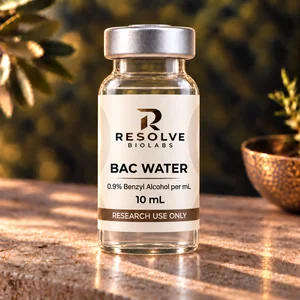
What bacteriostatic water is
Bacteriostatic water is sterile water with 0.9% benzyl alcohol added. It is one of the most common diluents in laboratories that work with lyophilized (freeze-dried) peptides, where a measured volume of liquid is added to a vial of powder to prepare a solution of known concentration.
Why benzyl alcohol
Benzyl alcohol is a preservative. At 0.9% it is bacteriostatic, meaning it inhibits the growth of bacteria rather than killing them outright. That is the key practical difference: once a container has been opened and accessed more than once, the preservative helps limit contamination. This makes bacteriostatic water suitable for preparing stock solutions that will be drawn from over several sessions.
How it compares with sterile water
- Sterile water contains no preservative. It is intended for single use; once opened, any remainder is usually discarded.
- Bacteriostatic water contains 0.9% benzyl alcohol, allowing multiple withdrawals from the same container under clean technique.
Some peptides or assays are sensitive to benzyl alcohol, so check your protocol. If a preservative could interfere with a measurement, sterile water may be the better choice.
The Resolve product
Resolve offers bacteriostatic water in a 10 mL container, the labeled volume. It pairs with the lyophilized vials across the catalog, from single peptides to multi-component blends. When planning reconstitution, divide the amount of compound in the vial by the volume of diluent added to get the working concentration, and note both in your records.
Good practice
Wipe the stopper with alcohol before each access, use clean equipment every time, and label the container with the date it was first opened.
Documentation
Lab essentials carry lot numbers too. The lot on your container can be matched to its documentation in COA / Lab Reports as files are added. Note the lot alongside every vial you reconstitute with it, so the diluent is traceable as well as the compound.
Bacteriostatic water is sold as a laboratory diluent for research use only.