NAD+
NAD+ is a coenzyme
NAD+ (nicotinamide adenine dinucleotide, oxidized form) is not a peptide. It is a coenzyme present in every living cell, made of two nucleotides joined through their phosphate groups. It shuttles electrons in metabolism, cycling between NAD+ and its reduced form NADH, and serves as a substrate for enzyme families such as sirtuins and PARPs.
Why researchers study it
Cellular NAD+ levels have been reported to decline with age in several animal models, which has driven a large body of research. Investigators have examined NAD+ and its precursors in cell culture and rodent studies of mitochondrial function, DNA repair, sirtuin activity and circadian regulation. Work in this area often measures the NAD+/NADH ratio directly, so starting material of known content is valuable. It is also widely used as a cofactor in enzyme assays, where dehydrogenase activity is tracked by the change in absorbance as NAD+ is reduced to NADH.
Two formats
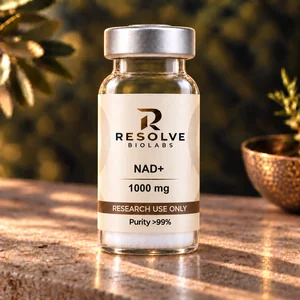
NAD+ vial
Lyophilized NAD+ in a sealed vial, with several sizes in the option selector. The label states the amount in milligrams per vial, and the vial gives the most control when preparing solutions of a specific concentration.
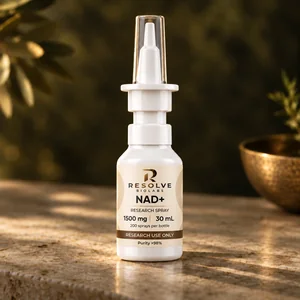
NAD+ liquid spray
A ready liquid preparation labeled by total NAD+ in the bottle and the bottle volume, from which the concentration per millilitre follows. It suits work where a pre-made solution is preferred over reconstituting powder.
NAD+ is a comparatively large-quantity compound, so its figures run into hundreds of milligrams rather than the single-digit amounts seen on most peptides here.
Lot records
Pair the lot number from your vial or bottle with its certificate of analysis. These are being collected under COA / Lab Reports. Since NAD+ comes as both powder and liquid, check that the report describes the format you hold. Contact support with product and lot if you need a certificate now.
For laboratory research use only.