IGF-1 LR3
What makes IGF-1 LR3 different
IGF-1 LR3 is an engineered form of insulin-like growth factor 1. Native IGF-1 is a 70-amino-acid protein; the LR3 variant is 83 residues long. It adds a 13-amino-acid extension at the N-terminus and replaces the glutamic acid at position 3 with arginine. That is where the name comes from: “L” for long, “R3” for the arginine substitution.
These changes greatly reduce binding to IGF-binding proteins, the carrier proteins that normally hold IGF-1 in an inactive state. As a result, LR3 stays available to the IGF-1 receptor for longer.
Where it is used
IGF-1 LR3 has a long history as a cell-culture supplement, especially in biomanufacturing, where it supports the growth of mammalian cell lines in serum-free media. Research labs also use it in studies of IGF-1 receptor signaling, the PI3K/Akt and MAPK pathways, and muscle-cell differentiation in vitro and in animal models. Comparisons between LR3 and native IGF-1 are a common way to separate receptor effects from the influence of binding proteins in a given system.
Handling
Because the LR3 form is potent in culture, it is usually worked with in microgram amounts, so careful labeling of stock solutions matters.
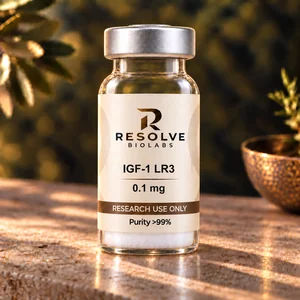
The vial on this page
Resolve lists IGF-1 LR3 as a lyophilized vial. Strengths are shown in the option selector, and quantities for this compound are stated in milligrams or fractions of a milligram rather than the larger figures seen on many other peptides.
Its COA
Read the lot on the vial, then open the certificate with the same lot from our list of COA / Lab Reports. Because IGF-1 LR3 is used in such small amounts, it is worth confirming the stated quantity on the report matches the label. We are posting these documents as they become available.
Restricted to research use in the laboratory.