Peptide Vials
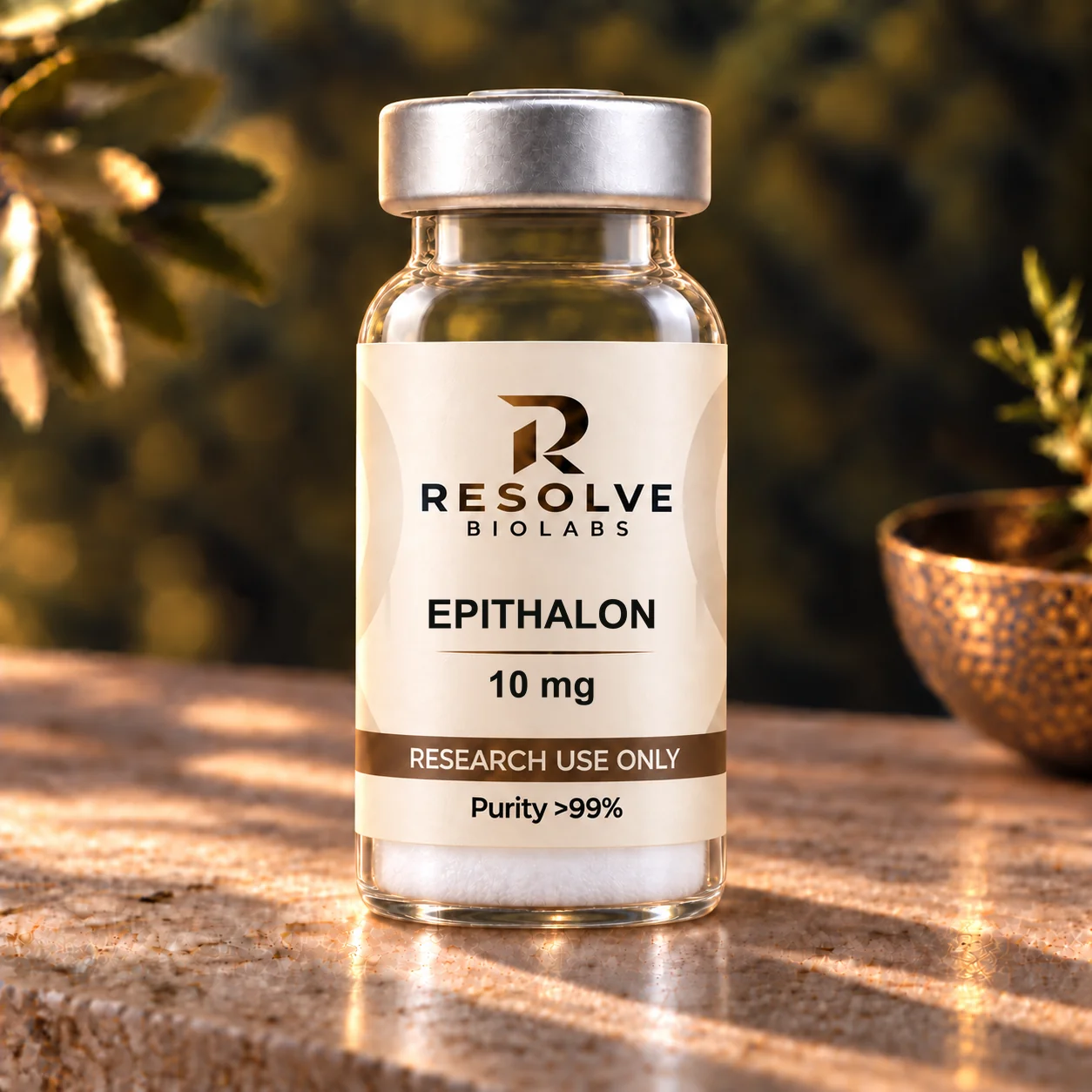
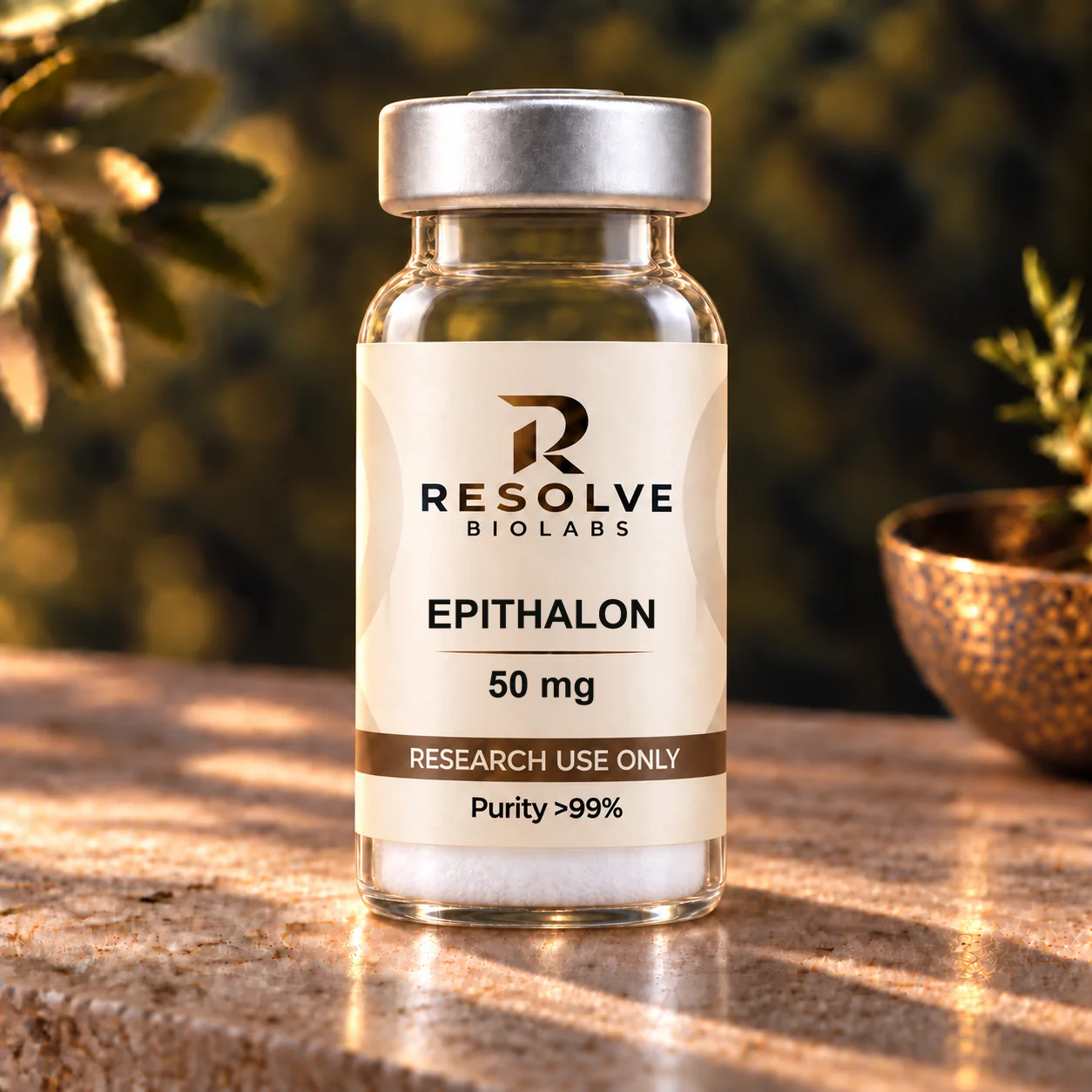
Epithalon Vial
Epithalon (Epitalon) is a synthetic tetrapeptide, Ala-Glu-Asp-Gly, studied in telomerase and ageing research. Lyophilized vials in 10 mg and 50 mg.
Identity & storage
- CAS number
- 307297-39-8
- Molecular weight
- ≈390.3 g/mol
- Storage
- Keep the unopened vial sealed and protected from light and moisture. Follow the temperature instructions on the product label. After preparing a solution, follow your laboratory’s validated storage protocol.
Certificate of analysis View available reports and lot details
Product identification & intended use
SKU: RES-9888
For laboratory research use only. Not for human or veterinary use.
Description
Epithalon — also spelled Epitalon and known by its sequence AEDG — is a synthetic four-amino-acid peptide developed by Vladimir Khavinson at the St. Petersburg Institute of Bioregulation and Gerontology. Resolve BioLabs supplies Epithalon in 10 mg and 50 mg lyophilized vials.
What is Epithalon?
Epithalon was designed as a synthetic counterpart to epithalamin, a peptide extract of the pineal gland that Khavinson’s group studied from the 1980s onward. Reducing the extract’s activity to a defined four-amino-acid sequence made it possible to produce a pure, reproducible compound. It is one of the family of short “bioregulator” peptides associated with that institute.
Epithalon specifications
| Sequence | Ala-Glu-Asp-Gly (AEDG) |
|---|---|
| Length | 4 amino acids |
| Molecular formula | C14H22N4O9 |
| Molecular weight | ≈390.3 g/mol |
| CAS number | 307297-39-8 |
| Synonyms | Epitalon, Epithalone, AEDG peptide |
| Form | Lyophilized powder |
| Strengths | 10 mg, 50 mg per vial |
| Catalog reference | RES-9888 |
Research background
Epithalon is best known from studies reporting telomerase activation and telomere elongation in cultured human somatic cells (Khavinson et al., 2003), along with work on melatonin secretion and circadian rhythm in aged animals, and lifespan studies in rodents and fruit flies. Most of this research comes from a single group of institutions, and independent replication is limited.
Format, storage and handling
Keep the unopened vial sealed and protected from light and moisture. Follow the temperature instructions on the product label. After preparing a solution, follow your laboratory’s validated storage protocol.
Testing and documentation
Available reports describe the samples tested. Match the compound, format, strength and lot identifier with your supplied label; a supplier report does not by itself verify current stock. See the report library.
Related research compounds
Other compounds used in longevity and cellular-ageing research: NAD+, MOTS-c, GHK-Cu and Thymosin Alpha-1. Reconstitute with bacteriostatic water.
Epithalon FAQ
Epithalon or Epitalon — which is correct?
Both spellings refer to the same Ala-Glu-Asp-Gly tetrapeptide.
What is the difference between Epithalon and epithalamin?
Epithalamin is a natural pineal-gland extract; Epithalon is the defined synthetic tetrapeptide developed from it.
Is Epithalon approved for human use?
No. It is sold for laboratory research only.
For laboratory research use only. Not for human or veterinary use. Not a drug, food, cosmetic or dietary supplement, and not intended to diagnose, treat, cure or prevent any disease.