Peptide Vials
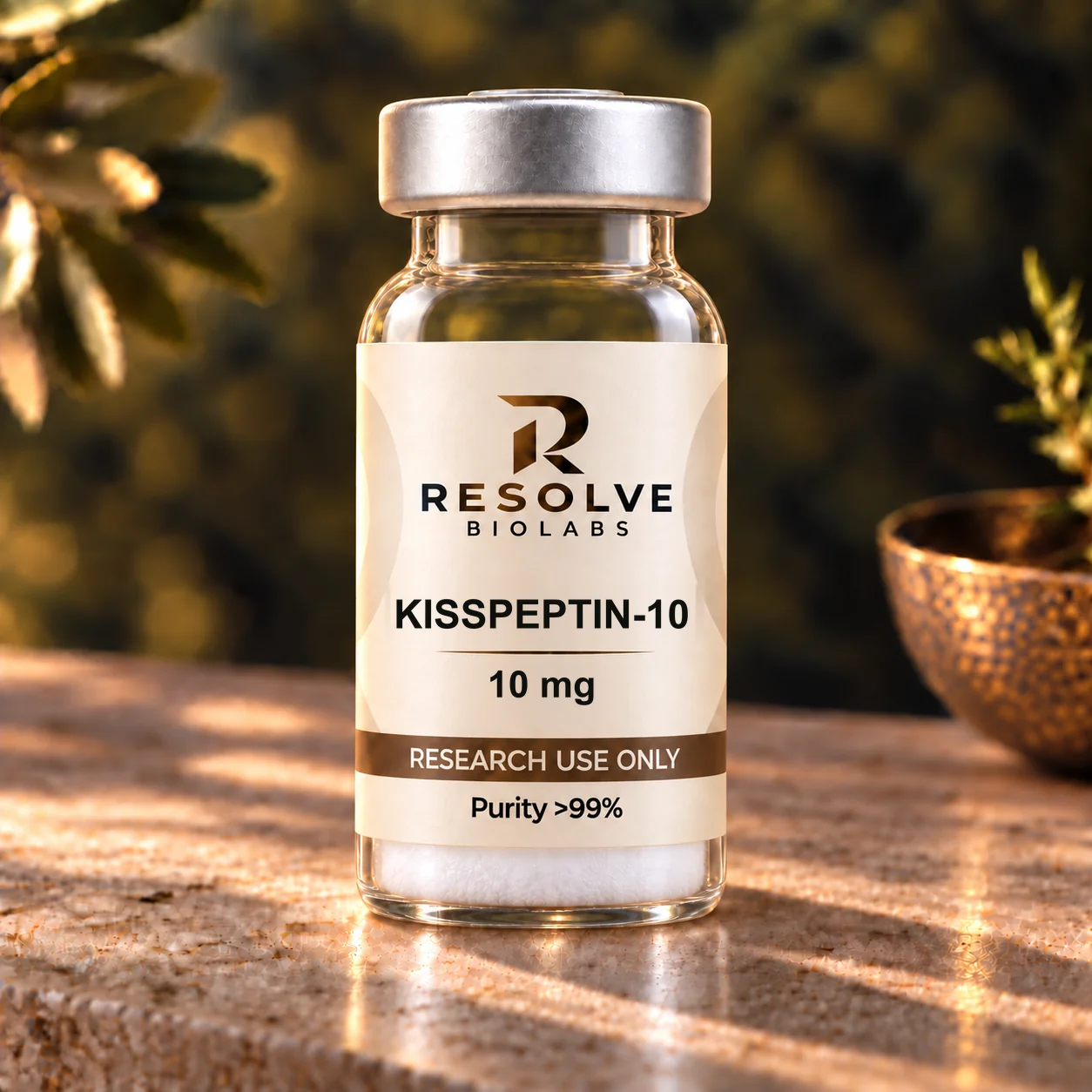
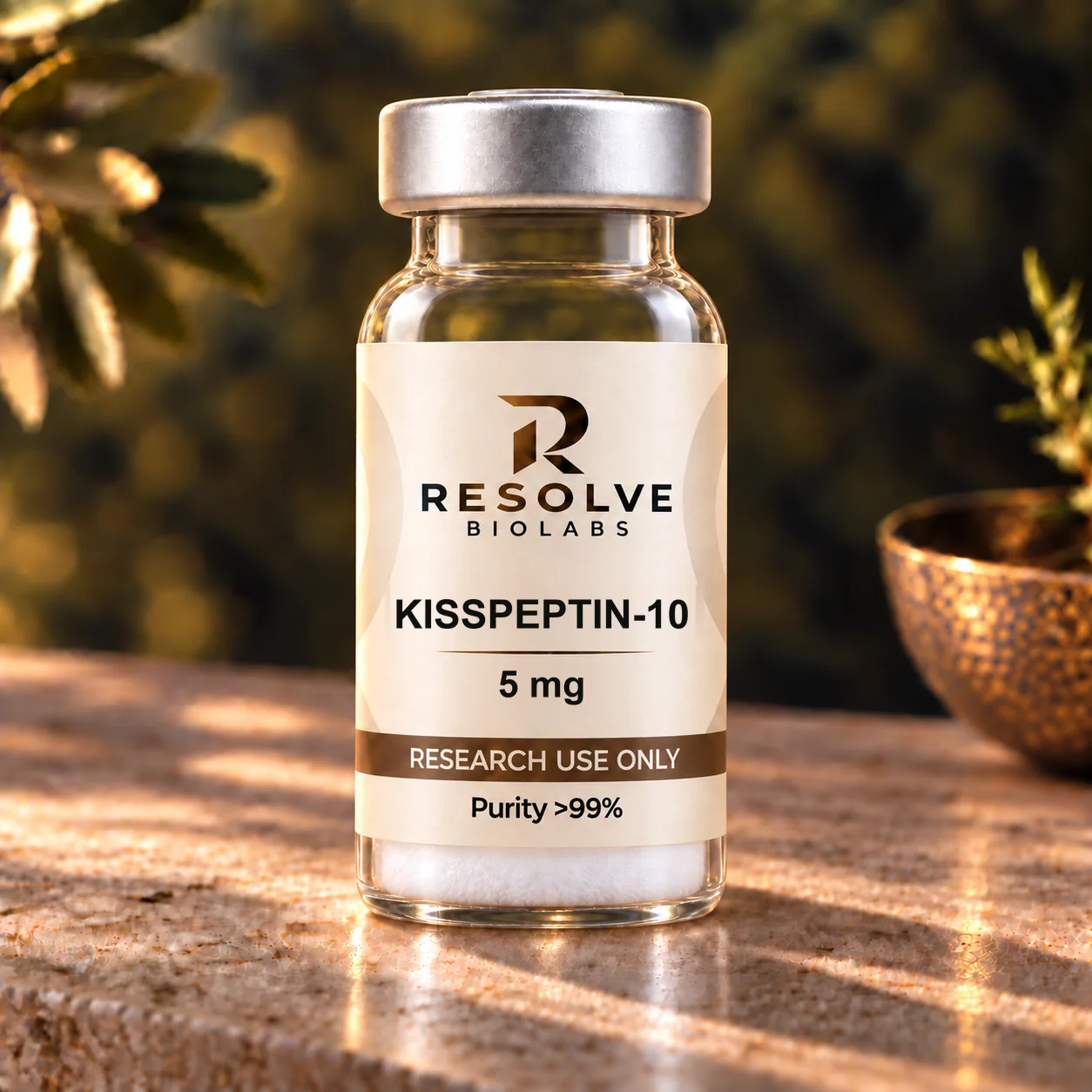
Kisspeptin-10 Vial
Kisspeptin-10 is the ten-amino-acid active fragment of kisspeptin and a KISS1 receptor (GPR54) agonist, studied in reproductive-hormone research. 5 mg and 10 mg vials.
Identity & storage
- CAS number
- 374675-21-5
- Molecular weight
- ≈1302.4 g/mol
- Storage
- Keep the unopened vial sealed and protected from light and moisture. Follow the temperature instructions on the product label. After preparing a solution, follow your laboratory’s validated storage protocol.
Certificate of analysis View available reports and lot details
Product identification & intended use
SKU: RES-9905
For laboratory research use only. Not for human or veterinary use.
Description
Kisspeptin-10 is the shortest fully active form of kisspeptin — the last ten amino acids of the hormone encoded by the KISS1 gene. It activates the KISS1 receptor (also called GPR54), a key upstream regulator of the reproductive hormone axis. Resolve BioLabs supplies Kisspeptin-10 in 5 mg and 10 mg lyophilized vials.
What is Kisspeptin-10?
The KISS1 gene was first studied in the 1990s as a metastasis suppressor (it was discovered in Hershey, Pennsylvania — hence the name, after Hershey’s Kisses). In 2003 two research groups showed that mutations in its receptor, GPR54, prevent normal puberty, revealing kisspeptin as the “gatekeeper” of GnRH release. The full peptide is 54 amino acids; the C-terminal decapeptide, kisspeptin-10, binds the receptor with similar potency.
Kisspeptin-10 specifications
| Sequence | Tyr-Asn-Trp-Asn-Ser-Phe-Gly-Leu-Arg-Phe-NH2 (YNWNSFGLRF-NH2) |
|---|---|
| Length | 10 amino acids, C-terminal amide |
| Molecular formula | C63H83N17O14 |
| Molecular weight | ≈1302.4 g/mol |
| CAS number | 374675-21-5 |
| Receptor | KISS1R (GPR54) |
| Form | Lyophilized powder |
| Strengths | 5 mg, 10 mg per vial |
| Catalog reference | RES-9905 |
Research background
Kisspeptin-10 is used to study how the hypothalamus controls GnRH neurons and, downstream, LH and FSH release from the pituitary. Human physiology studies (for example at Imperial College London) have used kisspeptin to examine LH pulsatility and reproductive endocrinology, and it continues to appear in research on puberty, fertility and metastasis biology.
Format, storage and handling
Keep the unopened vial sealed and protected from light and moisture. Follow the temperature instructions on the product label. After preparing a solution, follow your laboratory’s validated storage protocol.
Testing and documentation
Available reports describe the samples tested. Match the compound, format, strength and lot identifier with your supplied label; a supplier report does not by itself verify current stock. See the report library.
Related research compounds
Browse all peptide vials. Reconstitute with bacteriostatic water.
Kisspeptin-10 FAQ
What is the difference between kisspeptin and kisspeptin-10?
Kisspeptin exists in several lengths (54, 14, 13 and 10 amino acids). Kisspeptin-10 is the shortest version that still activates the receptor.
Why is it called kisspeptin?
The KISS1 gene was discovered in Hershey, Pennsylvania, and was named after Hershey’s Kisses.
Is Kisspeptin-10 approved for human use?
No. It is sold for laboratory research only.
For laboratory research use only. Not for human or veterinary use. Not a drug, food, cosmetic or dietary supplement, and not intended to diagnose, treat, cure or prevent any disease.