Peptide Vials
BPC-157 Vial
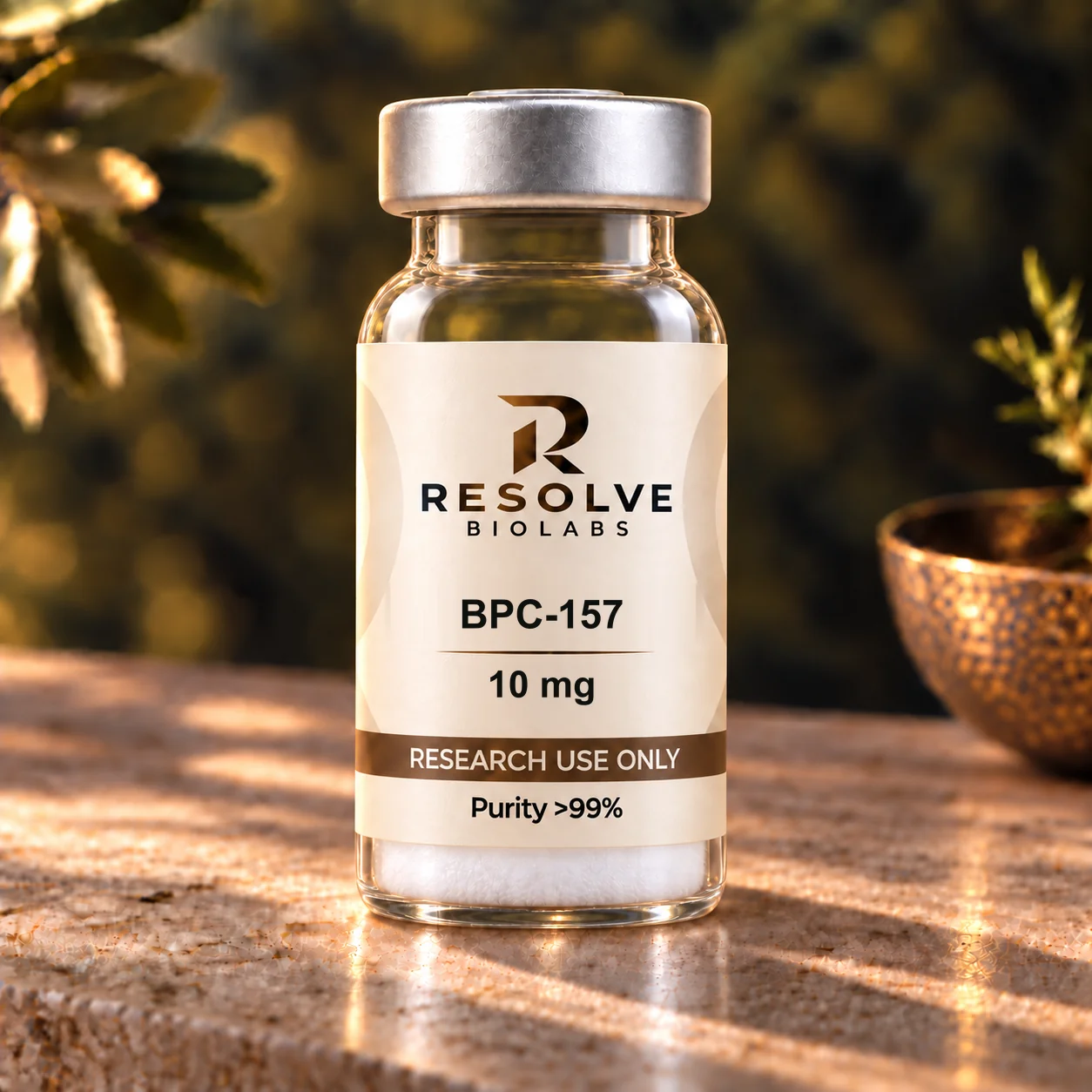
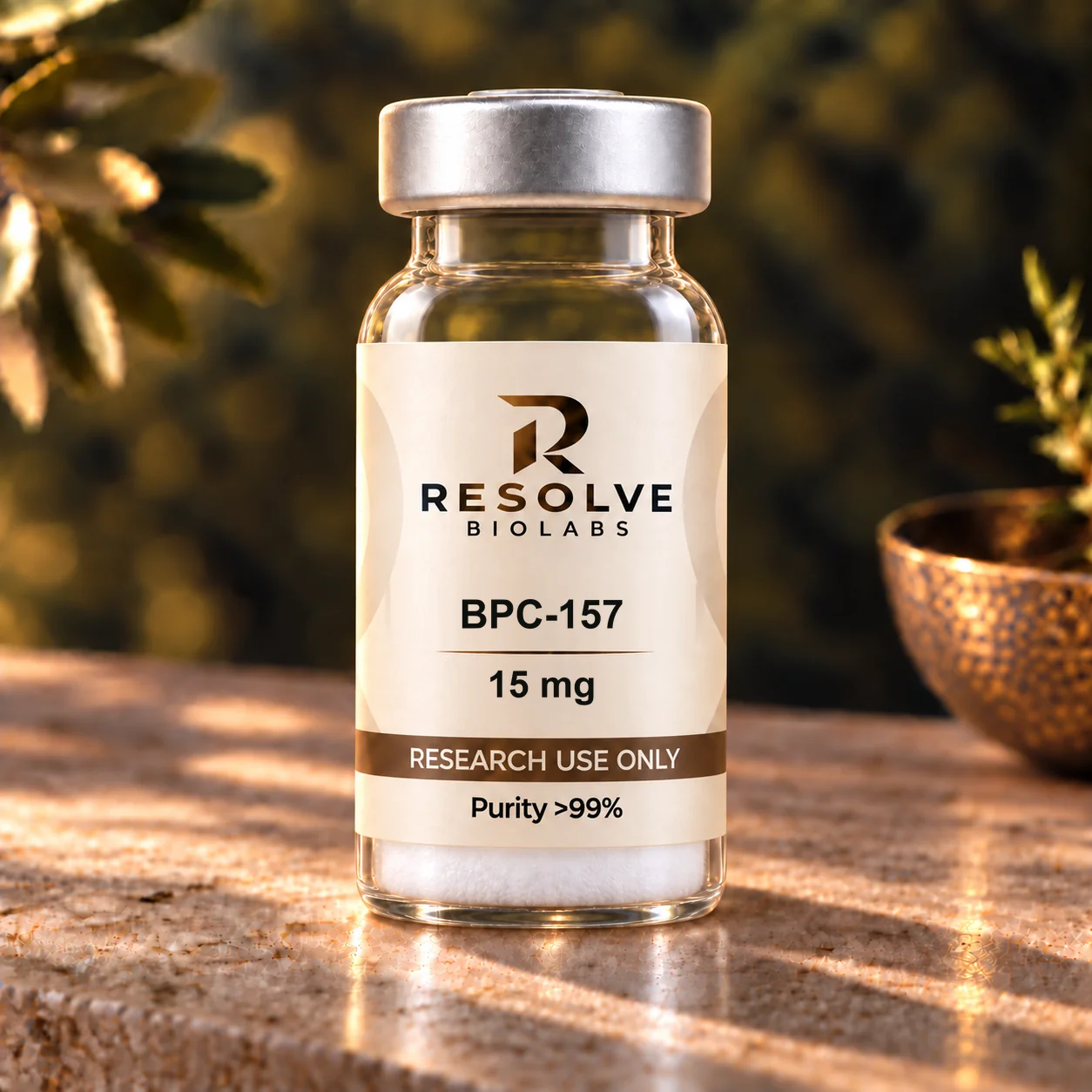
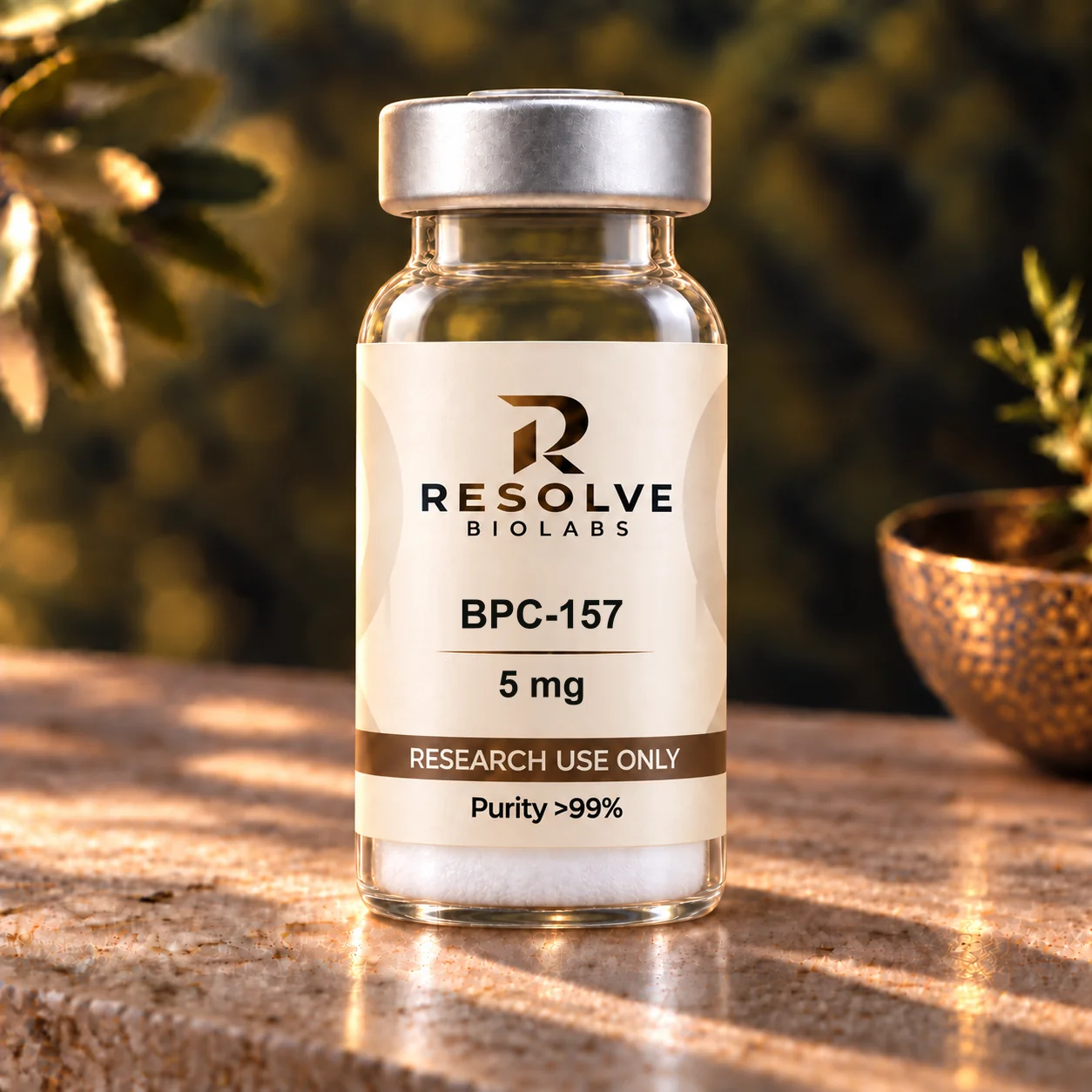
BPC-157 (Body Protection Compound-157) is a synthetic 15-amino-acid peptide supplied here as lyophilized powder in 5, 10 and 15 mg vials.
Identity & storage
- CAS number
- 137525-51-0
- Molecular weight
- ≈1419.5 g/mol
- Storage
- Keep the unopened vial sealed and protected from light and moisture. Follow the temperature instructions on the product label. After preparing a solution, follow your laboratory’s validated storage protocol.
Certificate of analysis View available reports and lot details
Product identification & intended use
SKU: RES-9880
For laboratory research use only. Not for human or veterinary use.
Description
BPC-157 is a synthetic pentadecapeptide (15 amino acids) whose sequence is taken from a larger protein found in human gastric juice. It is one of the most widely studied research peptides in preclinical tissue-repair literature. Resolve BioLabs supplies BPC-157 as a lyophilized powder in three vial strengths — 5 mg, 10 mg and 15 mg.
What is BPC-157?
The name stands for Body Protection Compound. The parent protein was first described by a research group at the University of Zagreb in the early 1990s, and BPC-157 is the stable 15-residue fragment that most of that group’s later work used. Unlike many peptides, it was reported to remain stable in gastric juice, which is why it appears in both injectable-model and oral-model studies.
BPC-157 is not approved by the FDA or any other major regulator for human use. It is sold strictly as a reference material for in-vitro and animal research.
BPC-157 specifications
| Sequence | Gly-Glu-Pro-Pro-Pro-Gly-Lys-Pro-Ala-Asp-Asp-Ala-Gly-Leu-Val (GEPPPGKPADDAGLV) |
|---|---|
| Length | 15 amino acids |
| Molecular formula | C62H98N16O22 |
| Molecular weight | ≈1419.5 g/mol |
| CAS number | 137525-51-0 |
| Synonyms | Body Protection Compound-157, PL 14736, bepecin |
| Form | Lyophilized powder |
| Strengths | 5 mg, 10 mg, 15 mg per vial |
| Catalog reference | RES-9880 |
Research background
Most published BPC-157 data comes from rodent and cell models. Areas that appear repeatedly in the literature include tendon and ligament healing models, gastrointestinal lining models, angiogenesis and blood-vessel formation, and the interaction of BPC-157 with the nitric-oxide system and growth-factor receptor expression (for example VEGFR2). Human clinical data is very limited, so findings should be read as preclinical.
Because it appears in so many models, BPC-157 is also frequently studied alongside thymosin beta-4 fragments such as TB-500 — see the BPC-157 + TB-500 blend vial.
Format, storage and handling
Keep the unopened vial sealed and protected from light and moisture. Follow the temperature instructions on the product label. After preparing a solution, follow your laboratory’s validated storage protocol.
Testing and documentation
Available reports describe the samples tested. Match the compound, format, strength and lot identifier with your supplied label; a supplier report does not by itself verify current stock. See the report library.
Related research compounds
BPC-157 is also available in two non-injectable research formats: BPC-157 capsules (500 mcg per capsule) and BPC-157 liquid spray (30 mg per 30 mL). Blends: BPC-157 + TB-500 vial, GLOW blend and KLOW blend. For reconstitution, see bacteriostatic water.
BPC-157 FAQ
What does BPC stand for?
Body Protection Compound. BPC-157 is a 15-amino-acid fragment of a protein originally isolated from human gastric juice.
Which vial strength should I choose?
The strength is the total amount of lyophilized peptide in each vial (5, 10 or 15 mg). Choose the size that fits your experimental design; the vial count is set separately with the quantity selector.
Is BPC-157 the same as BPC-157 arginate?
No. Arginate is a different salt form sometimes marketed for oral stability. This product is the standard acetate-form peptide; confirm the exact form for your lot on the COA.
Is BPC-157 FDA approved?
No. BPC-157 has not been approved for human or veterinary use and is sold for laboratory research only.
For laboratory research use only. Not for human or veterinary use. Not a drug, food, cosmetic or dietary supplement, and not intended to diagnose, treat, cure or prevent any disease.