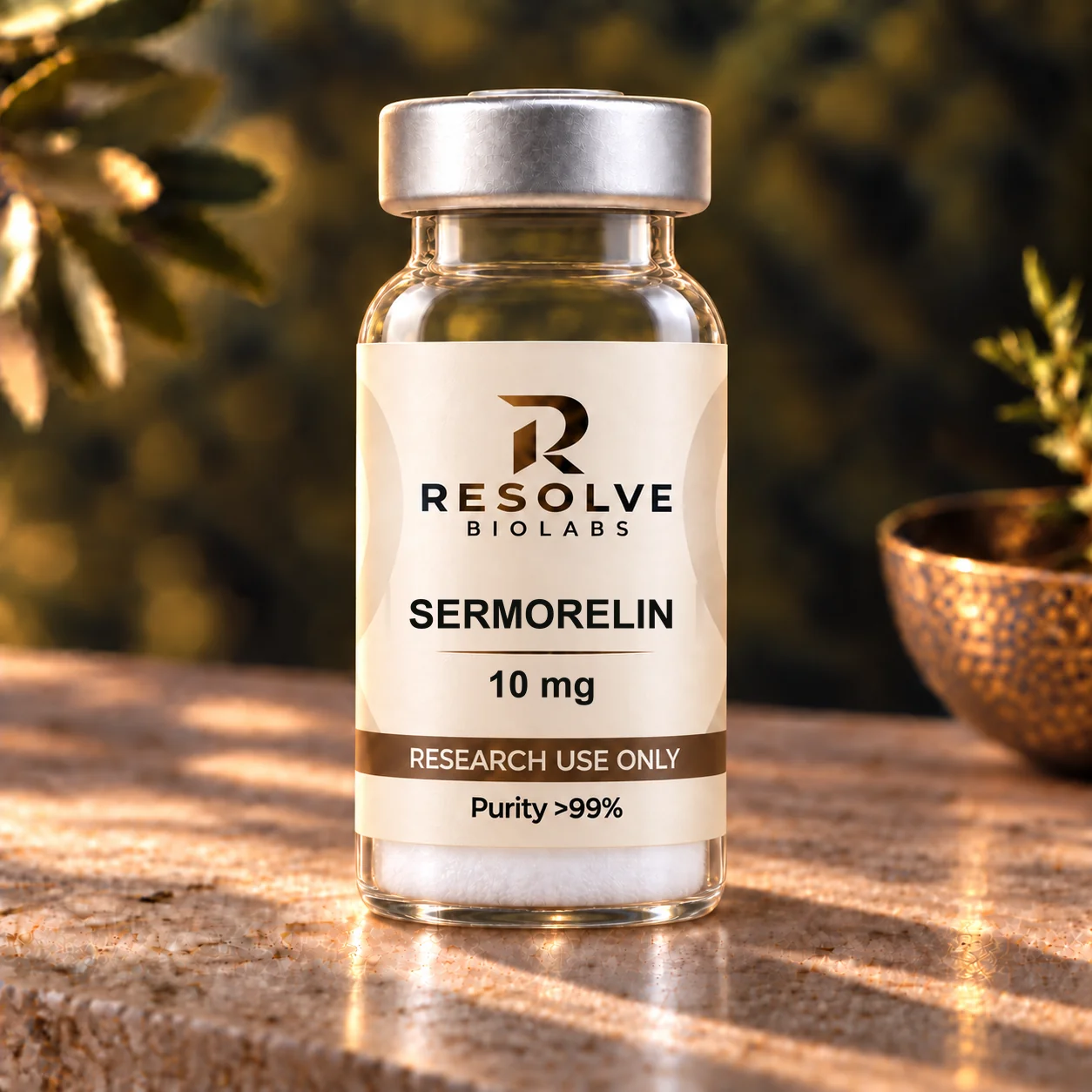

Peptide Vials
Sermorelin Vial
Sermorelin (GRF 1-29 NH2) is a 29-amino-acid analog of growth hormone-releasing hormone (GHRH). Lyophilized research vials in 5 mg and 10 mg
Identity & storage
- CAS number
- 86168-78-7 (sermorelin peptide reference)
- Molecular weight
- 3357.933 g/mol (peptide reference)
- Molecular formula
- C149H246N44O42S
- Storage
- Keep the unopened vial sealed and protected from light and moisture. Follow the temperature instructions on the product label. After preparing a solution, follow your laboratory’s validated storage protocol.
Certificate of analysis View available reports and lot details
Product identification & intended use
SKU: RES-9928
For laboratory research use only. Not for human or veterinary use.
Description
Sermorelin is a synthetic peptide made of the first 29 amino acids of human growth hormone-releasing hormone (GHRH) — the shortest portion of GHRH that keeps full activity at the GHRH receptor. Resolve BioLabs supplies sermorelin as lyophilized powder in 5 mg and 10 mg vials.
What is Sermorelin?
Natural GHRH is 44 amino acids long. In the 1980s researchers found that the N-terminal 1-29 fragment, amidated at the C-terminus, reproduced its activity, and that fragment became sermorelin (also written GRF 1-29 NH2 or GHRH 1-29). It was once marketed as a prescription product, which the manufacturer discontinued in 2008.
Sermorelin is the reference compound for a whole family of later GHRH analogs, including CJC-1295 without DAC (Mod GRF 1-29), which swaps four amino acids to resist enzymatic breakdown.
Sermorelin specifications
| Sequence | YADAIFTNSYRKVLGQLSARKLLQDIMSR-NH2 |
|---|---|
| Length | 29 amino acids, C-terminal amide |
| Molecular formula | C149H246N44O42S |
| Molecular weight | 3357.933 g/mol (peptide reference) |
| CAS number | 86168-78-7 (sermorelin peptide reference) |
| Synonyms | GRF 1-29 NH2, GHRH (1-29), sermorelin acetate |
| Form | Lyophilized powder |
| Strengths | 5 mg, 10 mg per vial |
| Catalog reference | RES-9928 |
Research background
Sermorelin is used in research on the growth hormone axis: how GHRH-receptor stimulation drives pulsatile growth hormone release from the pituitary, how that release is shaped by somatostatin feedback, and how the response changes with age. Because its short half-life mimics natural GHRH pulses, it is often used as a baseline when comparing longer-acting analogs.
It is frequently paired in study designs with ghrelin-receptor agonists such as ipamorelin, since the two act on different receptors in the same pathway.
Format, storage and handling
Keep the unopened vial sealed and protected from light and moisture. Follow the temperature instructions on the product label. After preparing a solution, follow your laboratory’s validated storage protocol.
Testing and documentation
Available reports describe the samples tested. Match the compound, format, strength and lot identifier with your supplied label; a supplier report does not by itself verify current stock. See the report library.
Related research compounds
Related growth-hormone-axis research compounds: CJC-1295 No DAC, ipamorelin and IGF-1 LR3. Reconstitute with bacteriostatic water.
Sermorelin FAQ
What is the difference between sermorelin and CJC-1295 no DAC?
Both are GHRH 1-29 analogs. CJC-1295 no DAC (Mod GRF 1-29) has four amino-acid substitutions that make it more resistant to enzymatic breakdown; sermorelin is the unmodified 1-29 sequence.
Is sermorelin the same as GRF 1-29?
Yes. GRF 1-29 NH2 and GHRH (1-29) are other names for sermorelin.
Is sermorelin still FDA approved?
The branded prescription product was discontinued in 2008. This material is sold for laboratory research only, not for human use.
For laboratory research use only. Not for human or veterinary use. Not a drug, food, cosmetic or dietary supplement, and not intended to diagnose, treat, cure or prevent any disease.