
Peptide Vials
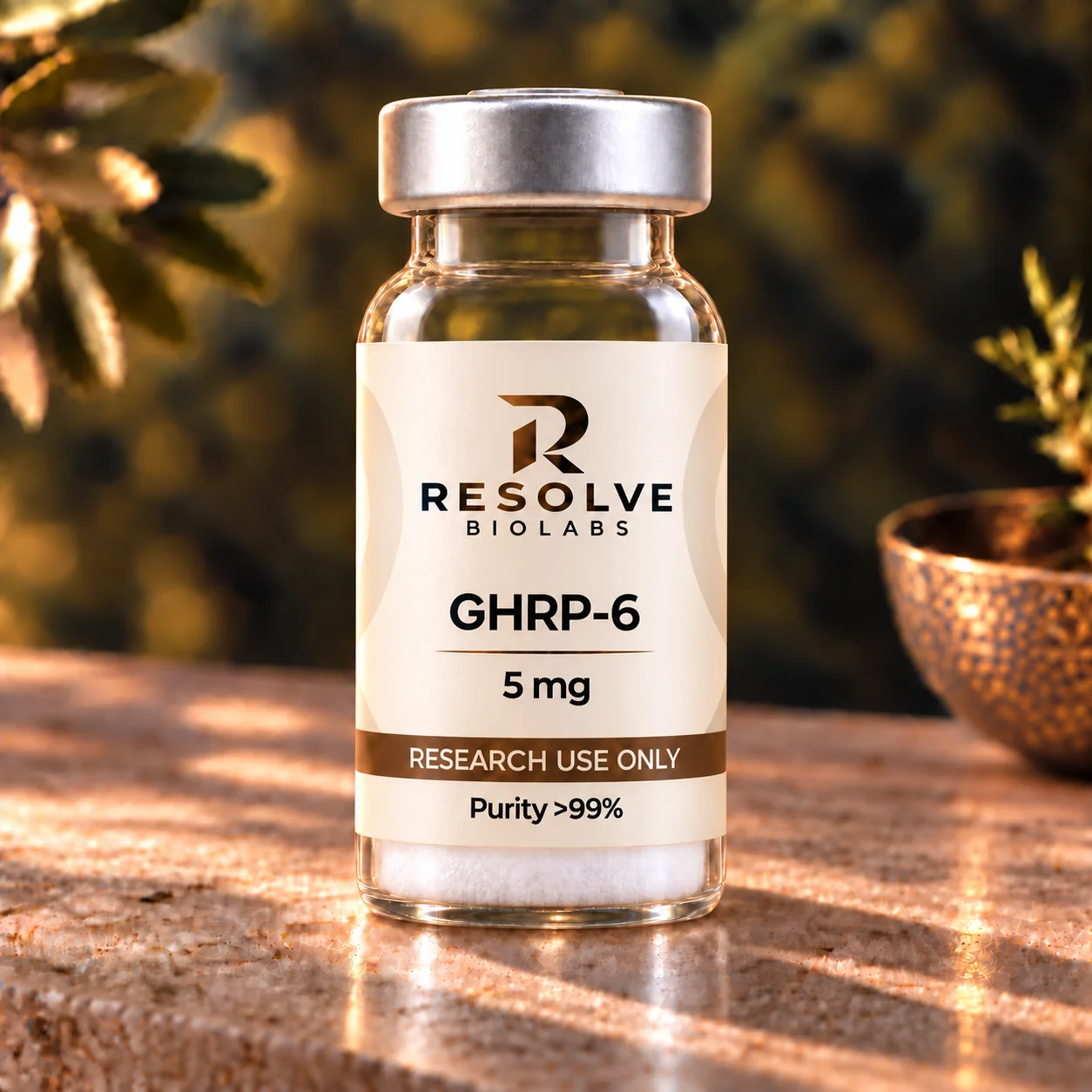
GHRP-6 Vial
GHRP-6 is a synthetic hexapeptide ghrelin-receptor agonist widely used in growth hormone secretagogue research. Each sealed vial holds 5 mg of freeze-dried powder, with a certificate tied to the production lot.
Identity & storage
- CAS number
- 87616-84-0
- Molecular weight
- 873.01 g/mol
- Molecular formula
- C46H56N12O6
- Storage
- Keep the unopened vial sealed and protected from light and moisture. Follow the temperature instructions on the product label. After preparing a solution, follow your laboratory’s validated storage protocol.
✓ In stock and ready to ship
Certificate of analysis View available reports and lot details
GHRP-6 5 mg
Product identification & intended use
SKU: RB-VIAL-GHRP6-5MG
For laboratory research use only. Not for human or veterinary use.
Description
Growth Hormone Releasing Peptide-6 (GHRP-6) belongs to the first generation of synthetic secretagogues, designed in the early 1980s from modified enkephalin structures. Its six residues include two D-amino acids, which help it resist rapid degradation in experimental systems. The receptor it binds, GHS-R1a, was later identified as the receptor for ghrelin, the stomach-derived hormone. That discovery turned GHRP-6 into a widely used reference ligand for studying ghrelin signaling.
GHRP-6 specifications
| Product | GHRP-6 Vial |
|---|---|
| Quantity | 5 mg |
| Format | Freeze-dried powder, sealed glass vial |
| Peptide class | Growth hormone secretagogue (GHS-R1a agonist) |
| Sequence | His-D-Trp-Ala-Trp-D-Phe-Lys-NH2 |
Research themes
Because GHRP-6 predates many newer secretagogues, it shows up across a broad range of published laboratory work. Topics investigated in cell and animal models include:
- Pituitary release of growth hormone and its interaction with GHRH signaling
- Ghrelin receptor pharmacology and appetite-related pathways in rodents
- Cytoprotection in experimental models of tissue injury, including cardiac and gastrointestinal tissue
- Comparison studies alongside later compounds such as ipamorelin and GHRP-2
Findings from these models are specific to the conditions under which they were gathered. Nothing on this page describes an outcome in people.
Working with a 5 mg vial
The 5 mg size suits pilot experiments and method development, where a smaller quantity keeps material from sitting unused. Before opening, let the vial reach room temperature to limit condensation on the powder. Reconstitute with a laboratory diluent appropriate to your assay, swirl gently rather than shaking, and label the resulting solution with the date and lot number. Unopened vials keep best cold and protected from light; prepared solutions are typically refrigerated and used according to your protocol’s stability window.
Traceable by lot
Available certificates describe the samples tested by the issuing laboratory; a stock-lot match must be documented separately. Look for the lot code on the vial label, then find the matching report on the COA / Lab Reports page. Reports are being posted as they become available; if yours is not listed, our support team can help when you send the product, quantity and lot number.
Related catalog items
Labs studying secretagogues often keep ipamorelin, sermorelin or CJC-1295 No DAC on hand for side-by-side work. Each of those is listed with the same plain labeling, so quantities are easy to line up across a study. Bacteriostatic water is available under lab essentials for groups that prefer to source their diluent alongside the peptide.
For laboratory research only. Not intended for human or veterinary use.
Reviews
There are no reviews yet.